

Casinia Casino review (2026): game range and customer support
Casinia Casino is built around a very large catalogue that’s organised into familiar sections: standard casino games (mostly slots), live dealer tables, and jackpots, with additional sorting by software studio. In this review, I’m focusing on two practical areas that affect everyday play: how the game library is structured and how customer support works when you need a precise, useful answer.
Game assortment in 2026: what you can play and how it’s grouped
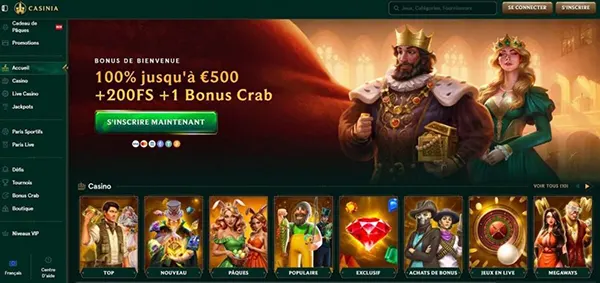
Casinia separates the lobby into three core areas—Casino, Live Casino and Jackpots—and within Live Casino it breaks the content down into clear families such as Roulette, Blackjack, Game Shows, Baccarat & Dice, and other table formats. This kind of navigation matters because it helps players avoid endless scrolling and move directly to the type of session they want.
Inside the main casino catalogue, the filtering is designed for fast browsing: you typically see quick sections like Top, New and Popular, and there are also themed groupings that help narrow down slot styles. If you already know what you’re looking for—feature-heavy slots, specific mechanics, or games with quicker bonus access—these categories reduce wasted time.
The key detail is scale: when a casino has a very large library, your experience depends less on “how many games exist” and more on how easily you can find suitable titles. A simple approach is to decide your own shortlist first—game type, preferred volatility, and budget—and then use the site categories to stay consistent rather than hopping randomly between games.
Providers and studios: why filtering by developer is useful
Casinia highlights many established software studios across its directory, which is relevant because providers often shape the “feel” of a game: hit frequency, bonus structure, volatility patterns, and even interface behaviour. If you already like how certain developers design their slots or live tables, filtering by provider is one of the quickest ways to keep your gameplay predictable.
This also helps with responsible play. When you stick to studios you understand, you’re less likely to chase unfamiliar mechanics that can change session volatility. For many players, this is more practical than trying to guess how a new title will behave after a few spins.
Provider information is also useful for troubleshooting. If a particular game fails to load, freezes, or behaves oddly on mobile, knowing the studio behind it makes it easier to describe the issue clearly to support, which usually leads to faster, more accurate help.
Live casino experience: tables, formats, and what to check before you sit down
The Live Casino area is typically grouped into the most popular families first—roulette and blackjack—followed by game shows and other table formats. This matters because each family can behave differently in terms of pace, limits, and session rhythm, which directly affects bankroll swing and time spent playing.
Before joining a table, it’s sensible to check three things: minimum stake, maximum stake, and the pace of the table. Two roulette tables can feel completely different if one runs faster or offers fewer side options. Over a long session, small speed differences can significantly change how quickly you cycle through your bankroll.
Live streams are also more demanding than standard slots, especially on mobile data. If your connection is unstable, choosing simpler tables with fewer camera angles and lighter overlays can reduce buffering. If the stream becomes unreliable, switching tables within the same category is often quicker than changing the entire game type.
Choosing live content: practical tips for better sessions
A common mistake in live dealer play is treating it like a continuous activity rather than a series of rounds. Because the experience feels social and “always on”, it’s easy to extend sessions without noticing. Setting a time cap before you join a table is one of the most effective ways to avoid accidental overspending.
It’s also worth paying attention to table rules and side bets. Many live tables offer optional bets that look attractive but can change variance sharply. If your goal is steadier play, sticking to base rules and avoiding frequent side bets can make sessions more controlled.
If you want consistency, try to limit how often you jump between formats. Switching from a fast roulette table to a slower blackjack table and then to a game show can distort your sense of time and spend. A cleaner plan is to choose one format per session and keep your bankroll allocation tied to that choice.
Customer support in 2026: channels, availability, and how to get useful answers
Casinia provides support through standard channels used by most major casinos: live chat for quick questions and email for longer requests. Many issues can also be resolved by checking the help section first, especially when the question is procedural rather than account-specific.
Live chat tends to work best for urgent problems: login issues, payment errors, verification questions, or anything that blocks access to your account. Email is usually more practical when you need to attach documents, describe a timeline in detail, or include reference numbers from payment services.
If you want fewer generic replies, the most effective approach is to send complete information immediately. Include your username (never your password), the exact date and time of the problem, the payment method or game involved, and a screenshot if the issue is visible. Clear inputs typically reduce the number of back-and-forth messages.
Withdrawals and verification: how to keep support conversations factual
Withdrawal delays and verification requests are among the most common reasons players contact support. These topics often have standard steps and status updates, so the fastest way to get clarity is to ask for your request status in simple terms—submitted, under review, approved, or paid out—and whether any verification action is still pending.
When the issue is about “why a method isn’t available” or “why a request can’t be submitted”, it’s useful to state what you see on screen and which method you’re trying to use. Many payment limitations are conditional, and support can only confirm the correct rule if they understand the exact scenario.
If you feel the answer is too vague, ask support to confirm what they can see on their side and what specific step is required from you next. This keeps the conversation grounded in practical actions rather than assumptions, and it helps prevent misunderstandings about processing time or eligibility.